
The Top Ten Best Hit Songs of 1959
Now that we’re working with a full slate of 100 hits, we can look forwards to a full Top Ten list. This time, there’s no Special Mention, but with 5 more songs to talk about, we still have quite a few hidden gems and classics to go over. Let’s get into the Honorable Mentions!
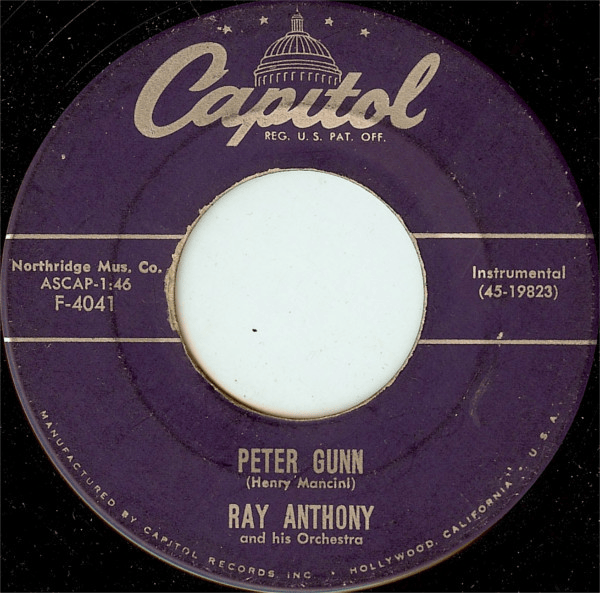
HM #1: Ray Anthony – Peter Gunn Theme
Peak: #8 Year-End: #66
As an avid enjoyer of the 1980 classic The Blues Brothers, I would be remiss to not at least mention the scene in that film where Carrie Fisher’s character tries to kill Jake and Elwood Blues with a bazooka while this song plays. It’s a nice piece of music to accompany important business getting done. Also Ray Anthony is still alive at age 104 and that is very impressive indeed!
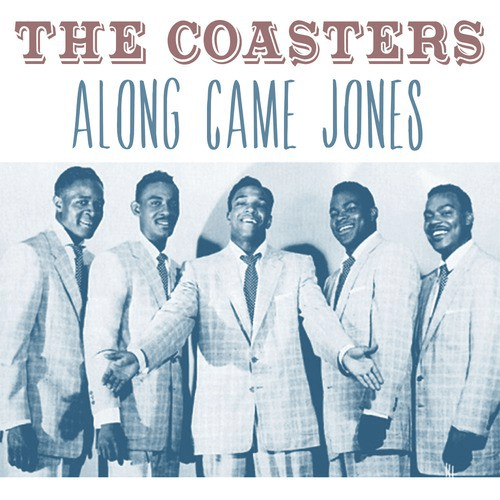
HM #2: The Coasters – Along Came Jones
Peak: #9 Year-End: #80
I made it pretty clear in my worst list that Comedy Music from 1959 was by-and-large not-so-good, but I’ll grant The Coasters an exemption from that. These guys had 3 Year-End Hits, and all 3 will be on this list at different points. “Along Came Jones” has the I-guess-unfortunate honor of being the weakest, mainly because this is the least enjoyable of the 3 to listen to.
Basically, this song is the plot of an old Western show being narrated by a bunch of wry Black Singers who find the cyclical, repetitive nature of the show to be humorous and silly, even changing the channel to a different program, only to find the exact same plot (originally, they would also point out the titular character’s White aesthetic, but the higher-ups at Atlantic Records vetoed this idea).
It’s by no means a laugh factory, but I’d be lying if I said that the “And Then” refrain didn’t put a smirk on my face, along with the very emotive performances. You can tell everyone involved had a lot of fun making this. Actually, I think I can fairly state the theme of this best list will be Fun To Listen To.
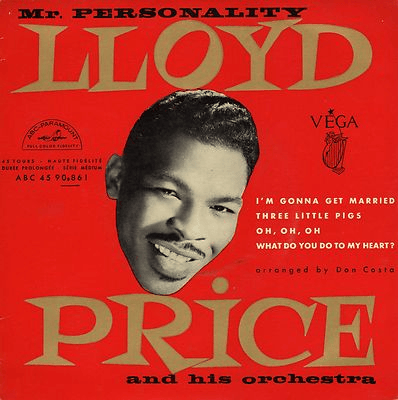
HM #3: Lloyd Price – I’m Gonna get Married
Peak: #3 Year-End: #23
Lloyd Price, aka “Mr. Personality”, also had 3 hits in 1959, and this won’t be the last we’ll see of him either. “I’m Gonna Get Married” is a straightforward song about how a guy who can’t stand being lonely gets married, despite being told he’s too smart and young to get married. I like it, Price has a good voice for this, and the surprisingly nuanced lyrics really elevate it. The heart wants what it wants is the message, and it’s damn effective here but…
Let’s count down the Top Ten Best Hit Songs of 1959!!!
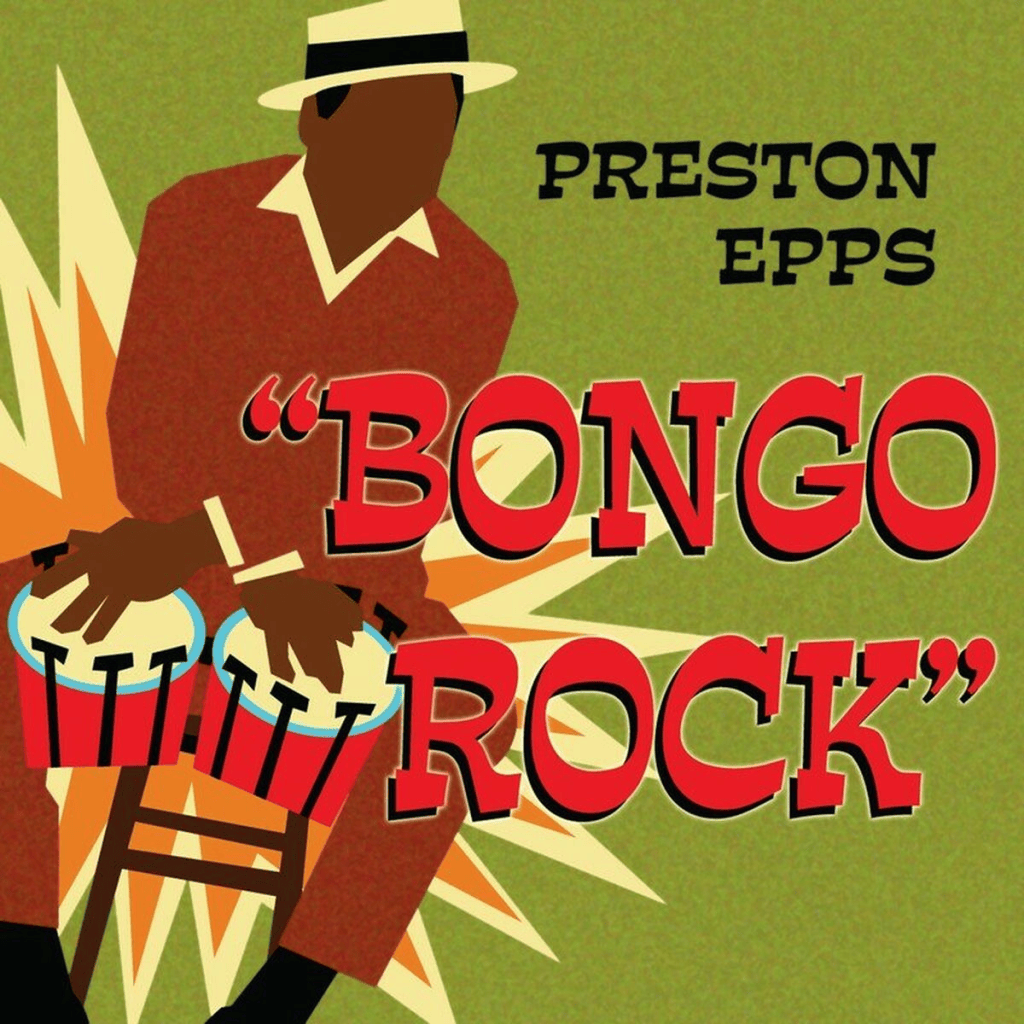
10. Preston Epps – Bongo Rock
Peak: #14 Year-End: #98
Not 1, not 2, but 3 instrumentals made this list, which is probably the most there will ever be on any of my lists. As for this one, “Bongo Rock” is on my list because it’s a really fun, energetic song with bongos and guitars that doesn’t go on for too long and keeps things fresh throughout. This is the best usage of bongos on a hit song until “Do It Again”, and also, without this song, we wouldn’t have “Wipeout” by The Surfaris, so yeah, it definitely belongs on the list. Moving on…
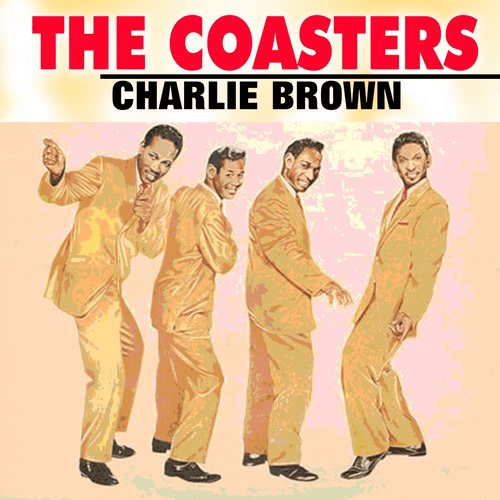
9. The Coasters – Charlie Brown
Peak: #2 Year-End: #17
This might be a strange comparison, but I think “Charlie Brown” by The Coasters is the “Eleanor Rigby” of the 1950s*. You might think I’m crazy (Oh wait, that’s The Cars), but I think both songs, despite them being tonal opposites, have a lot in common under closer inspection.
*Sadly, “Eleanor Rigby” peaked at #11 and did not make the 1966 Year-End, but I will give it a Special Mention when I get to 1966.
For one, both songs are ‘character-songs’. “Charlie Brown” being about a troublemaker student, and “Eleanor Rigby” being about the lonely people of the world. The songwriting on both songs is highly evocative and memorable, to the point where I’d unironically call “Charlie Brown” proto-McCartney. They both incorporate their characters into the song using specific motifs to illustrate their characters well; The Coasters make use of this with a halting piano line and lively saxophone playing, not to mention the specific lyrics that paint the title character (no relation to The Peanuts’ Charlie Brown) out as something of a dopey troublemaker.
More importantly, I think both songs are analogous to each other from the standpoint of what their decade of music represented. While “Charlie Brown” is a great piece of music to look at and listen to, it ultimately presents little more than a well-done caricature. Contrastingly, “Eleanor Rigby” demonstrates just how complex Popular Music would become once the Fab Four and others like them revolutionized Popular Music as we know it.
It’s a bit one-note, but I’d be lying if I said it wasn’t a hell of a fun time to come back to this song as a relic of this Pre-Beatles era.
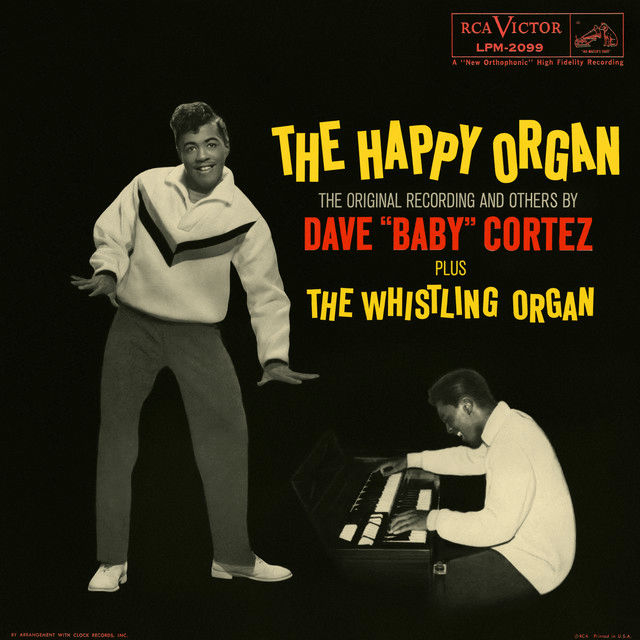
8. Dave “Baby” Cortez – The Happy Organ
Peak: #1 Year-End: #22
Sometimes good music doesn’t need to be a character study or ode to love. Sometimes good music just needs to get your feet tapping and your head boppin’, as is the case for this gem, “The Happy Organ”. Yeah, don’t expect much analysis in this entry, sometimes good music just speaks for itself.
While “The Happy Organ” is an incredibly simple song, it originally featured vocals, but Cortez was unsatisfied with it, and so he went to play the melody by itself. Letting the music speak for itself was the right decision, because it lets the appealing earworm qualities rest unabated in your ears. This song helped me burn a couple calories boogin’, and I really can’t get mad at any song that keeps me healthy like that :)
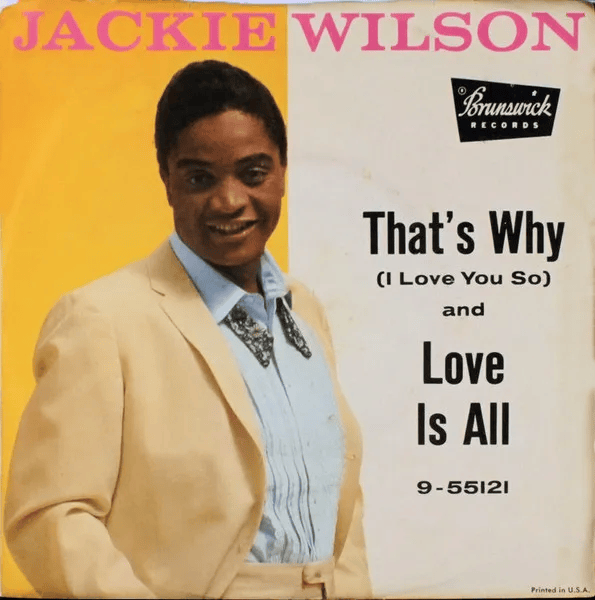
7. Jackie Wilson – That’s Why (I Love You So)
Peak: #13 Year-End: #90
Fun Fact, this is the second hit song written by one Berry Gordy Jr. after Jackie Wilson’s other hit from this year, “Loney Teardrops”. It’s kinda fascinating how you can see the mechanisms of the 1960s hit parade falling into place. Anyways, this song is an absolute classic. Wilson’s singing voice is wonderful for this loving ode to his partner, and the backing track complements him well. It’s just a feel-good song that no one with a decent bone in their body could get mad at.
6. The Coasters – Poison Ivy
Peak: #7 Year-End: #54
While “Poison Ivy” isn’t as funny as “Along Came Jones” or immediately memorable as “Charlie Brown”, I have it as my favorite of the 3 for one pretty simple reason: it’s a damn catchy tune! Seriously, Lieber and Stoller must have been on some crazy drugs when writing this one. The simple refrain followed by “Late at night while you’re sleepin’ / Poison Ivy comes creepin’ around” is one of the most deceptively earwormy hooks out there.
This song’s subject matter is basically don’t mess around with crazy because you’ll get an STD. And while that might be a little antiquated of a lesson by today’s standards, they do a good job at not making it sound misogynistic to the best of their abilities. The light-hearted lilt of the meter doesn’t hurt either, and neither does abstinence /s
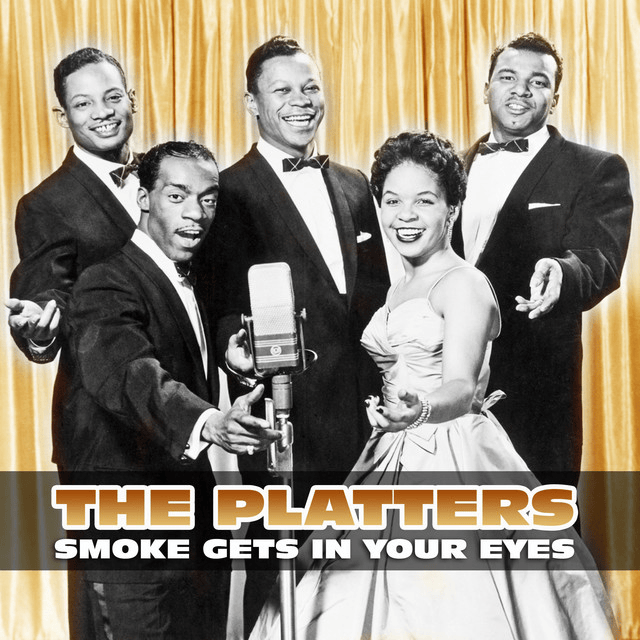
5. The Platters – Smoke Get In Your Eyes
Peak: #1 Year-End: #16
Interestingly, this song actually originated in the 1933 musical Roberta, and had been covered and recorded by a litany of artists prior to The Platters getting their hands on it, including Nat King Cole, Glenn Miller, and Benny Goodman among many others. In a way, that timelessness lends itself to this song in a way that elevates it above the contemporary Doo-Wop and R&B works.
If I had to describe “Smoke Gets In Your Eyes” by The Platters in one word, I would immediately reply with “Beautiful”. The very high-quality mix, tremendous backing vocals, silk-smooth orchestral arrangement, and, of course, Tony Williams impeccable singing all compound the tragic romantic undertones presented while still rendering the song palatable to listen to no matter what your mood is. The poignant look at a lost love you thought was secure as a lyric is merely a cherry on the top of an amazing looking (and tasting) sundae.
4. Santo & Johnny – Sleepwalk
Peak: #1 Year-End: #11
“Sleepwalk” by Santo & Johnny is a peculiar song. No lyrics, no distinct sections, no particularly memorable moments, just a 2-minute-long noodle session. It does have a dreamlike etherealness to it, fitting the title. But “Sleepwalk” is a song you experience, not listen to, and if you’ve looked under the comment section of the YouTube video, you’ll know exactly what I mean.
This song has an uncanny ability to reflect one’s emotions; if you’re feeling happy, this song sounds happy, but a sudden mood shift could turn this into a morose ode to better times, a funeral song, or the tune played at the end of the world. This is true of many songs, yes, but “Sleepwalk” is unique in that, by lacking anything other than the instrumental, all of that reflection is based solely on one’s state of mind.
To me, that’s the genius part of this song, because it’s incredibly easy to make a song sound happy, sad, epic, simple, or any other adjective you could think of, but, it’s a lot more difficult to make one convey so many different moods while remaining effectively neutral at the same time, and it’s even more rare and impressive to do so while having a unique vibe to boot. It’s a tricky tightrope to navigate, but “Sleepwalk” walks the walk.
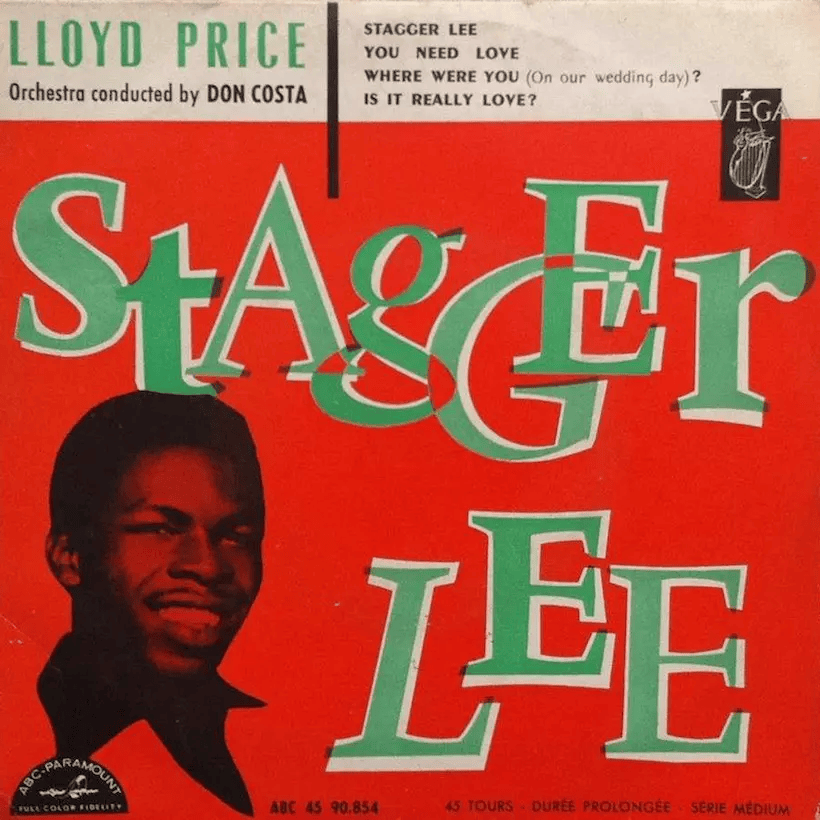
3. Lloyd Price – Stagger Lee
Peak: #1 Year-End: #13
Starting off the podium is…A Jazz Murder Ballad…. Yeah okay, sure, why not?
Dating back to 1911, “Stagger Lee” is actually a folk song, which I absolutely would not have parsed without outside help (thanks, Wikipedia). It takes the form of a murder ballad, telling the story of two men gambling, Stagger Lee and Billy, who get into a conflict while gambling. Stagger Lee shoots and murders Billy, end of story.
What sets Lloyd Price’s rendition apart from other equivalent murder ballads of the day (minus one exception we’ll be getting to soon) is the performance. While “Tom Dooley” by The Kingston Trio, for example, is a rather plodding and lifeless attempt at a similar folk tale, “Stagger Lee” is a jovial, danceable, and almost happy stab (no pun intended) at a gruesome murder.
That might seem like a strange twist for a song about murder, but what it does is make the song exponentially more enjoyable to listen to. The background vocalists chanting “Go, Stagger Lee” and Price’s performance make you root for the man, which is a damn impressive feat. As a side note, I interpret that the narrator is Ol’ Stagger Lee himself, which, if true, makes this song a fair bit more interesting.
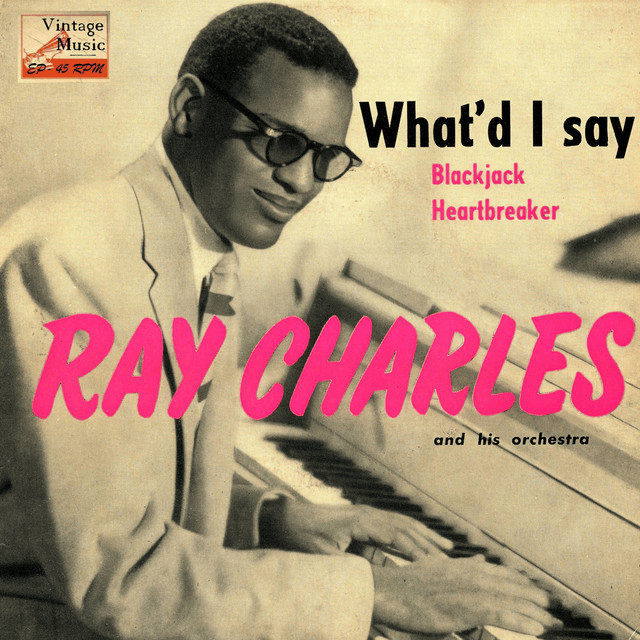
2. Ray Charles – What’d I Say
Peak: #6 Year-End: #50
I hope you’re ready for me to glaze Ray Charles so hard you’ll think I work for Krispy Kreme for every Best List until The Beatles come around. And while he’s more well-known for “Hit The Road Jack”, “I Can’t Stop Loving You” and “Georgia On My Mind”, “What’d I Say” still holds up against those titans by being an enormously catchy, energetic composition, to the point that Charles would always close out live shows with it.
Charlies immediately catches one’s ears with the intro, opening with a groovy Wurlitzer riff (I love me a good Wurlitzer, Hammonds too) and some nice ad-libbed lyrics about a girl with a diamond ring who can shake her thing *clenches pearls*. Halfway through, Charles and his backup singers, The Raelettes, go into a call-and-response that I can’t help but feel was sexually provocative in nature, it’s something you gotta hear.
And that’s exactly why people loved it. Sure, both White and Black radio stations banned it, but people bought and listened to this enough for it to be a Top Ten hit, proving that good music and compelling stylistic choices win out in the end. This song managed to do quite well for itself, and establish Ray Charles as a hitmaker, and break boundaries in yet another way by having the song last 5 minutes long (the original was 7 minutes, but the most common edit is a 5 minute splice of the two parts)
Admittedly, this song isn’t really much more than a somewhat provocative series of disjointed musical ideas, but I’d be lying if I said it wasn’t also a really fun time as well. It’s great to dance to, and only the most prudish and disagreeable folks (i.e Billboard Magazine “He shouts out in percussive style … Side two is the same.”) could hate it.
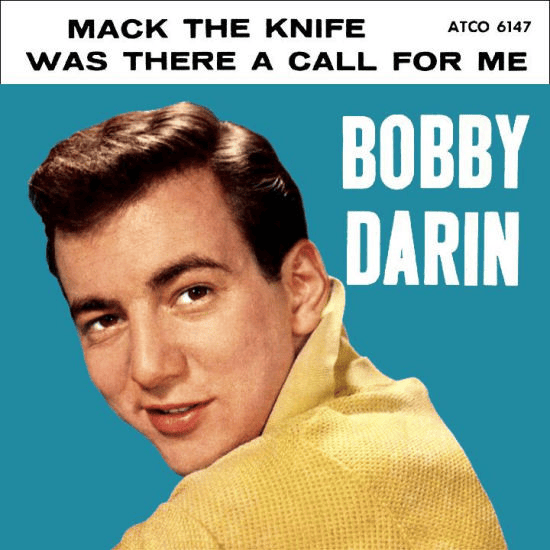
1. Bobby Darin – Mack the Knife
Peak: #1 Year-End: #2
Originating much earlier than 1959 (in this case, 1928)? Check
Peppy, upbeat Murder Ballad? Check
Makes me want to dance? Check, mate.
Ladies and Gentlemen, the Best Hit Song of 1959, “Mack the Knife”
Originally composed for an opera, “Mack the Knife” has instead lived on as a Swing-Jazz standard, first with Louis Armstrong’s rendition in 1955, and solidified with Bobby Darin’s rendition just a few years later. Not only is this one of the most iconic hits of this early era of Billboard, but it’s also notably one of the biggest hit songs of all time. Specifically, it’s the 4th biggest hit song of all time (as of 2021, so it’s entirely possible it slipped down an entry or two).
And guess what, IT’S A FUCKING BANGER!!! Darin takes a page out of Frank Sinatra’s book, singing with a jazzy flair that adds a layer of theatrics and affability that only further enhances the atmosphere on this song. He sings it like he’s telling his girlfriend about a grisly murder, and he’s evidently having the time of his life while he’s doing it.
One thing that truly elevates this song from just another great Jazz tune to an incredible piece of Popular music is the progression. Starting with the 3rd verse (Sunday morning), Darin pitches the tone up a semitone, making it go from B-flat up to E-flat. In addition to keeping the song fresh sonically, this has the added benefit of making each verse sound more tense, as if the titular character himself is slowly creeping up behind you as the song goes on and more details about MacHeath are revealed or hinted at.
Interestingly, it’s never outright said that MacHeath / Mack the Knife kills anybody, nor is he described physically in any way apart from his switchblade and MacHeath spending a bunch of money. The lyrics show, instead of telling, and it bolsters the ambiguous, yet lingering sensation of something wrong.
While “It’s Only Make Believe” showcased how pure emotion can be enough to make a song impactful, “Mack the Knife” shows us just how fun and yet dark a Pop Song can be. For that, it’s my pick as the Best Hit Song of 1959.


Leave a Reply